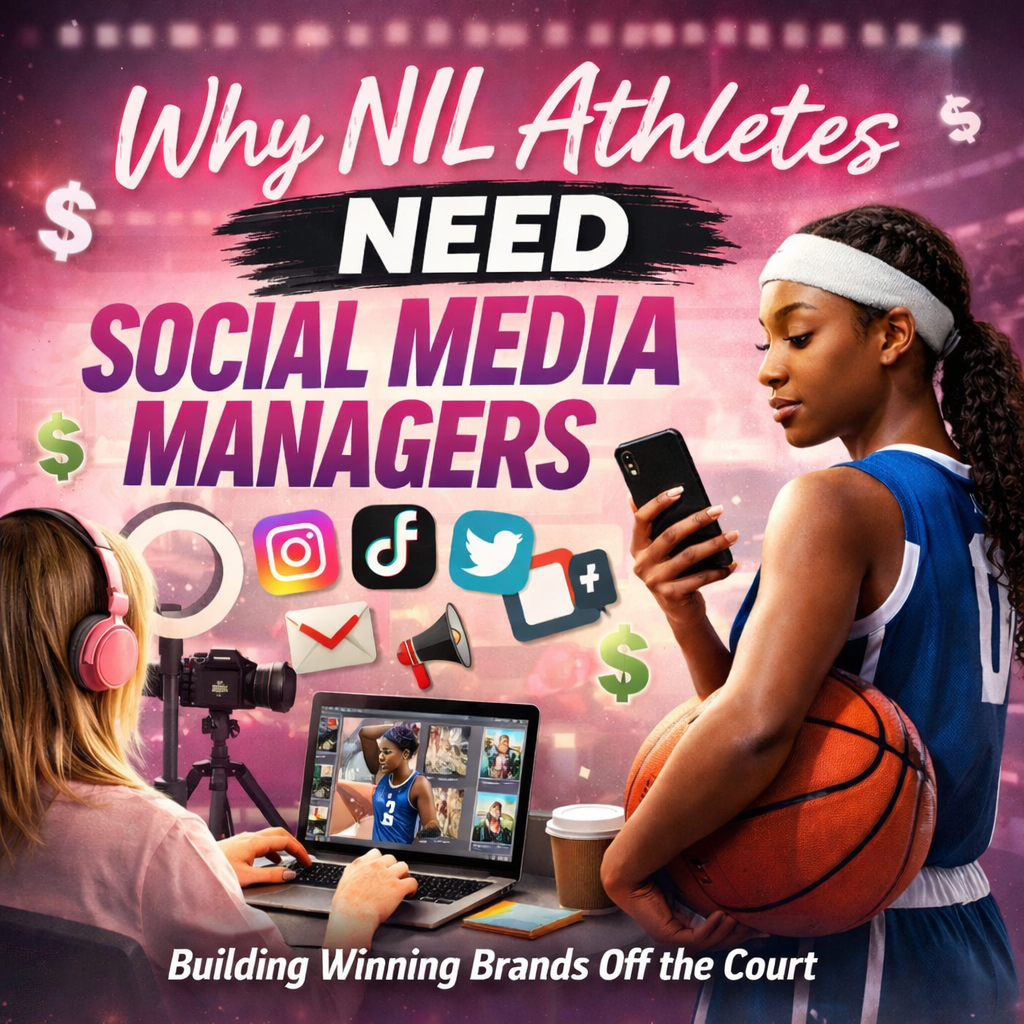
In the past, college athletes were known primarily for their performance on the field or court. Their reputation came from game highlights, championships, and the recognition they earned through their schools. But today, the landscape of sports has changed dramatically. With the introduction of Name, Image, and Likeness (NIL), athletes are no longer just competitors — they are brands.
The NIL era has opened doors for college athletes to earn money through endorsements, sponsorships, and partnerships. For the first time, athletes can profit from their own image, personality, and influence. While this opportunity is incredible, it also comes with a new challenge: managing a personal brand in the digital age. That’s where social media managers come in.
Athletes Are Now Personal Brands
Social media has become one of the most powerful tools for athletes. Platforms like Instagram, TikTok, and X allow players to connect directly with fans and companies. A strong social media presence can lead to brand deals, partnerships, and long-term financial opportunities.
Athletes such as Caitlin Clark and Angel Reese built massive followings during their college careers. Their social media influence helped them secure endorsement deals and become recognizable figures beyond the game itself. Their brand power didn’t just come from their talent on the court — it came from the way they connected with fans online.
But building and maintaining that type of presence isn’t easy.
The Reality: Athletes Don’t Have Time
College athletes already balance demanding schedules that include training, games, classes, travel, and media obligations. Expecting them to consistently post content, engage with fans, manage partnerships, and maintain a strategic brand identity is unrealistic.
This is why social media managers are becoming more valuable than ever.
A social media manager helps athletes maintain consistency online, build a professional brand, and maximize their opportunities. They handle tasks like content planning, brand partnerships, audience engagement, and overall digital strategy. Instead of athletes scrambling to post when they remember, a manager ensures their presence stays active, polished, and aligned with their goals.
Protecting an Athlete’s Reputation
Social media can build a brand, but it can also destroy one. In today’s world, a single post or comment can go viral for the wrong reasons and negatively impact an athlete’s reputation.
This is another major reason why professional social media management matters. Managers help athletes think strategically about what they post, how they communicate with fans, and how they represent themselves publicly. They also help prevent mistakes that could cost athletes endorsement deals or future opportunities.
Building a Brand That Lasts Beyond College
The NIL era isn’t just about making money in college — it’s about building a brand that lasts long after an athlete leaves school.
Players who develop strong personal brands early are often better positioned when they move into professional leagues like the WNBA or NBA. Their fanbase already exists, their identity is established, and companies recognize their value.
For example, WNBA star A’ja Wilson has built a powerful personal brand through storytelling, authenticity, and connection with fans. That type of brand presence doesn’t happen by accident. It requires strategy, consistency, and a clear understanding of how athletes present themselves online.
The Future of Athlete Branding
As NIL continues to reshape college athletics, one thing is becoming clear: athletes are no longer just players — they are media personalities, influencers, and entrepreneurs.
The most successful athletes in this new era will be the ones who understand the importance of their brand and invest in building it properly. Social media managers will play a crucial role in that process, helping athletes navigate the digital landscape while they focus on what they do best: competing at the highest level.
The game has changed. Talent on the court still matters, but in today’s sports world, how athletes show up online may matter just as much.


Leave a Reply